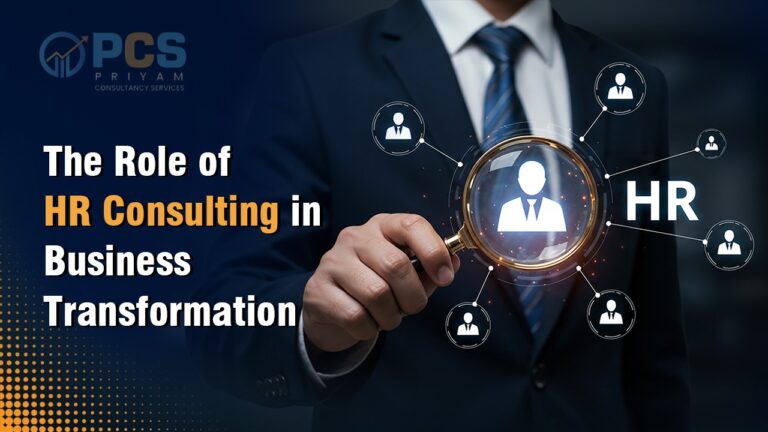
As businesses navigate an era of constant change and competition, the need for strategic adaptability and innovation has never been greater. HR consulting has emerged as a key driver of organizational transformation, aligning people, processes, and performance with business goals. An HR consultant partners with leaders to unlock workforce potential and shape agile, future-ready organizations.
HR consultants provide expertise across workforce planning, talent management, HR policy development, and HR digital solutions. They bridge the gap between organizational goals and employee performance, ensuring that businesses can navigate complex challenges efficiently. By offering objective insights and implementing HR transformation solutions, these professionals help companies enhance productivity, reduce attrition, and build a future-ready workforce.
These days, companies often work with HR consultants to help them make changes. This is usually because the staff within HR are not specialized or not many. HR consultants help with processes, strategies, and solutions to help companies grow.
Real change in business isn’t merely a matter of installing the latest tools or redrawing the org chart; it lives with the people who have to make it real. Whether the move is a sweeping digital overhaul or a subtle tweak in how teams work, its success ultimately comes down to how quickly-and how wholeheartedly employees adjust, sign on, and keep delivering results.
HR transformation services help organizations align their workforce with business objectives. This involves assessing employee capabilities, analyzing cultural readiness, and identifying skill gaps. By integrating digital HR transformation tools, such as HR management systems, workflow automation, and analytics, HR consultants enable organizations to streamline operations while maintaining high employee engagement.
When firms ignore the people’s dimension of change, they usually find themselves battling pushback, sluggish output, and a revolving door of talent. The ones that lean on HR transformation services, though, roll out new directions far more smoothly-keeping their workforce engaged and pointed at the same organizational North Star. Put simply, HR consulting supplies the crossing that turns bold strategy into day-to-day reality, so transformation actually sticks.
An HR consultant does more than manage processes they are strategic enablers of organizational change. Their work spans multiple dimensions:
Effective change starts with people. HR consultants design structured change management frameworks to guide transitions-whether it’s restructuring, process integration, or digital adoption. Their focus is on reducing resistance, enhancing communication, and building organizational agility.
Leaders shape transformation. HR consultants develop leadership programs that strengthen decision-making, emotional intelligence, and adaptability. By nurturing future-ready leaders, organizations ensure smoother transitions and a culture of trust, accountability, and performance.
Building the right culture is essential for long-term success. HR consulting fosters inclusive, purpose-driven, and performance-oriented environments. Through targeted engagement initiatives and values-based programs, they align employee behaviors with organizational goals.
By integrating performance management systems with strategic objectives, HR consultants create data-backed frameworks that improve individual and team effectiveness. Clear KPIs, feedback mechanisms, and recognition programs help drive accountability and excellence.
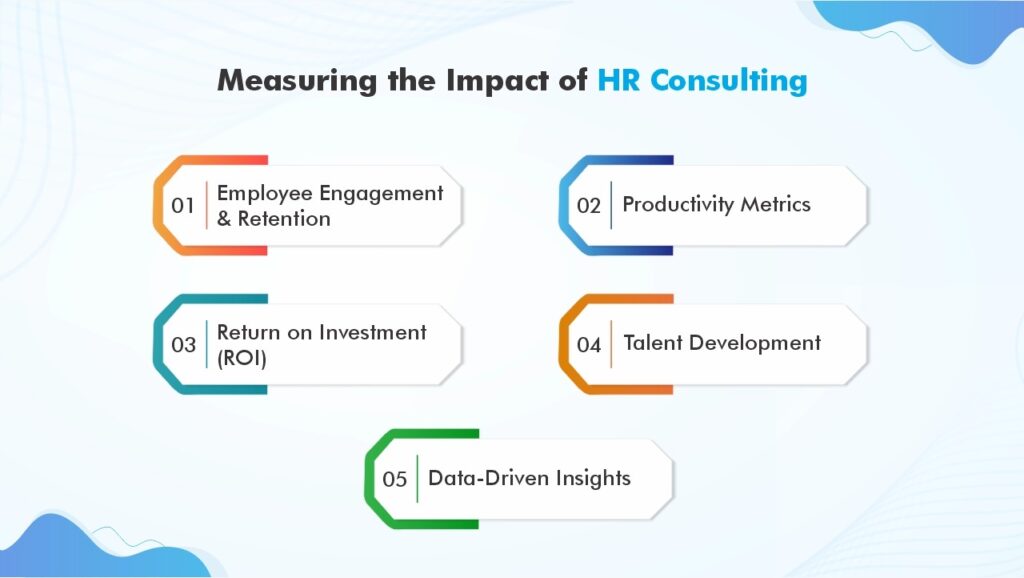
Higher engagement levels translate into lower attrition and improved productivity. HR consulting partnerships implement programs that enhance satisfaction and motivation.
Optimized workforce performance is a direct result of streamlined processes, clear role definitions, and skill development initiatives.
Companies can track financial benefits arising from better HR processes, increased turnover, and operational efficiency.
HR transformation services ensure employees acquire the right skills for current and future business needs, preparing the organization for long-term growth.
Modern HR leverages predictive and prescriptive analytics to forecast attrition, identify skill gaps, and measure engagement impact for smarter, faster organizational decisions.
Additionally, the use of HR digital solutions and HR technologies enables data-driven decision-making. Predictive analytics, for instance, helps forecast attrition risks, identify high-potential talent, and assess the impact of training programs, making HR consulting measurable and results-oriented.
Partnering with HR consultants offers numerous advantages, making them indispensable for businesses undergoing transformation:
Access to HR transformation solutions without the need for a large internal team. Consultants bring deep knowledge of best practices, labor laws, and advanced HR tools.
HR consulting partnerships allow organizations to scale support based on needs, whether during rapid growth, restructuring, or digital transformation initiatives.
Ensuring adherence to labor laws, regulatory requirements, and HR policies is crucial for avoiding legal or operational pitfalls.
Programs designed by HR consultants improve engagement, motivation, and overall employee satisfaction, which contributes directly to business performance.
In short, leveraging HR transformation services allows organizations to focus on growth while ensuring their workforce remains aligned, productive, and future-ready.
The role of HR consulting in business transformation is evolving rapidly, with HR technologies, digital HR transformation, and data-driven strategies shaping the future of work. Businesses are increasingly leveraging HR transformation services to build future-ready workforces, optimize processes, and ensure employee engagement while embracing innovation and agility. By partnering with expert HR consultants, organizations can not only navigate change successfully but also unlock sustainable growth and competitive advantage. If you’re looking to transform your HR strategy, drive organizational development, build talent, monitor performance, streamline payroll and operations, and enhance workforce efficiency, explore the tailored solutions offered by PCS to guide your journey towards a smarter, more agile business.