Introduction
In today’s fast-changing business environment, recruitment and selection are no longer just HR activities—they are critical business functions that directly impact productivity, growth, and long-term success. Organizations face increasing challenges such as talent shortages, longer hiring cycles, rising costs, and evolving workforce expectations.
To stay competitive, businesses must move beyond traditional hiring methods and adopt modern recruitment and selection strategies that are data-driven, scalable, and aligned with organizational goals. This blog explores how companies can optimize the recruitment and selection process in HRM, reduce hiring risks, and build high-performing teams using proven frameworks and contemporary HR practices.
What Is Recruitment and Selection?
Recruitment and selection are two closely connected stages of the human resource recruitment & selection lifecycle, each serving a distinct purpose.
- Recruitment focuses on attracting a pool of suitable candidates for open roles.
- Selection focuses on evaluating and choosing the most suitable candidate from that pool.
Together, they form the foundation of the recruitment and selection process, ensuring organizations hire talent that aligns with both role requirements and long-term business objectives.
Difference Between Recruitment and Selection
Understanding the difference between recruitment and selection helps HR teams design more efficient, outcome-driven hiring systems.
Recruitment and Selection Process in HRM (Step-by-Step Framework)
- Workforce Planning & Role Definition
Identify hiring needs, role objectives, and required skills.
- Talent Sourcing & Recruitment Strategy
Use job portals, social platforms, referrals, employer branding, and recruitment partners.
- Screening & Shortlisting
Filter resumes using defined criteria and skill alignment.
- Interviews & Assessments
Conduct structured
interviews, skill tests, and behavioral evaluations.
- Final Selection & Offer Management
Select the best-fit candidate and manage offers efficiently.
- Onboarding & Probation Review
Ensure smooth integration and early performance tracking.
This framework supports scalable HRM recruitment & selection across growing organizations.
Why Recruitment and Selection Strategies Matter for Business Growth
Effective recruitment and selection strategies deliver measurable business outcomes:
- Reduce time-to-hire and recruitment costs
- Improve employee performance and retention
- Ensure workforce readiness during growth phases
- Minimize hiring risks and compliance issues
- Strengthen employer brand and candidate experience
Modern hiring is not about filling roles—it’s about building teams that drive sustainable growth.
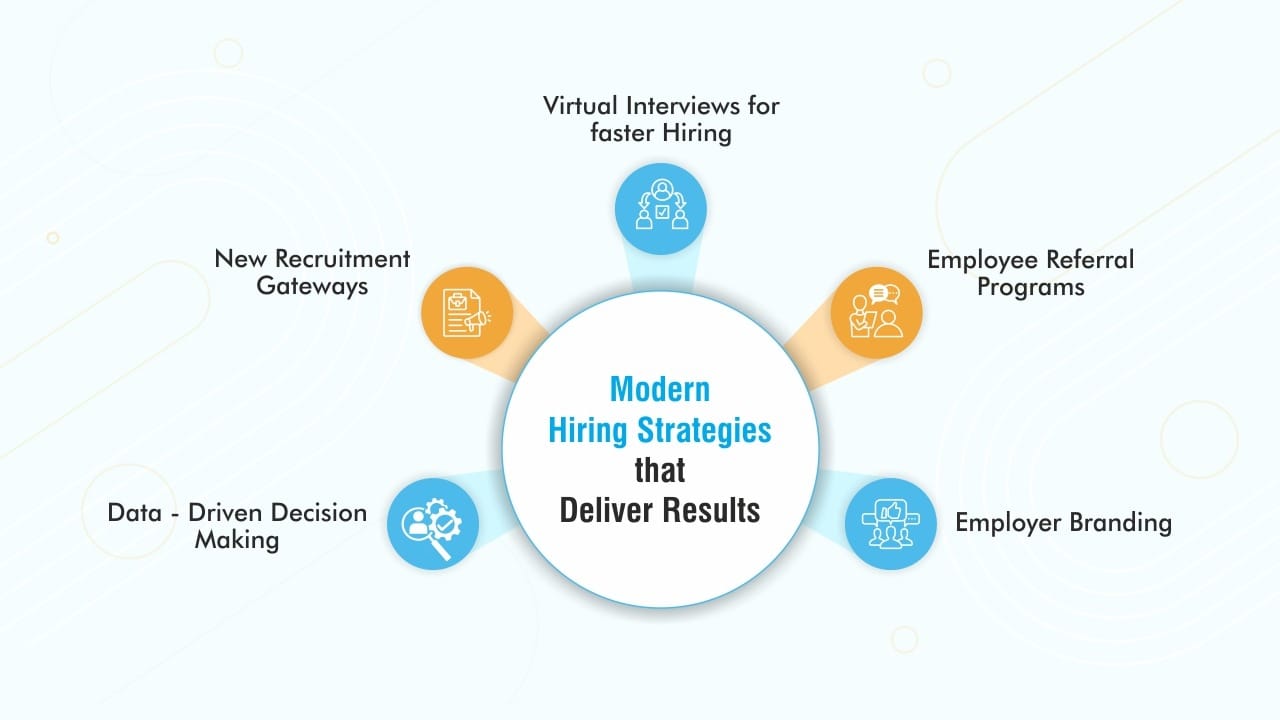
Modern Hiring strategies that deliver results
Data - Driven Decision Making
Data-driven recruitment leverages analytics to identify the most suitable candidates by analyzing behavior, performance, and hiring trends. This approach reduces unconscious bias, enhances decision-making accuracy, and strengthens overall HR outcomes. Moving away from intuition, modern hiring now relies on key metrics such as time-to-hire, cost-per-hire, and quality-of-hire, ensuring efficiency, fairness, and better alignment with business goals.
New Recruitment Gateways
Social channels like LinkedIn, Instagram, and niche job boards act as powerful hiring gateways by expanding your reach to both active and passive candidates. Beyond job postings, they allow organizations to engage with potential talent, showcase company culture, and build strong employer branding. Thought leadership content, interactive engagement, and digital outreach increase visibility, strengthen credibility, and attract top talent. By integrating social platforms into recruitment, hiring becomes faster, more targeted, and strategically aligned with HR goals.
Virtual Interviews for faster Hiring
Use technology to do online interviews. Online interviews save your time and money. You can even meet people from far away. Virtual interviews help you talk to different people fast and easily. They make interviews flexible and work well. This leads to fast decision-making, and makes the recruitment process more efficient. With remote work as the new normal, organizations are adopting digital solutions like virtual job fairs, remote interview panels, and digital onboarding process to connect with global talent and make hiring process easier from start to finish.
Employee Referral Programs
Encourage employees to recommend talented professionals from their known network, which creates a trust regarding the employee. Referral programs not only improve the quality of hires but also boost employee engagement, retention, and cultural fit, since candidates referred by staff are often more aligned with company values.
Employer Branding
Employer branding plays a central role in any recruitment and selection process. Showcasing your company’s culture, values, and growth opportunities builds a strong image that attracts top candidates. As part of comprehensive recruitment and selection, effective branding helps businesses stand out in competitive markets, making recruitment and selection more impactful.
Contemporary Selection Strategies
Skill-Centered Recruitment Methods
A modern recruitment and selection method emphasizes skills over traditional qualifications. HR selection ensures candidates are evaluated based on practical abilities, problem-solving, creativity and adaptability. By adopting skill-centered approaches, organizations improve their recruitment and selection process, leading to stronger performance and alignment with long-term Human Resource Management objectives.
Structured Interviews for Fair Selection
Structured interviews are a critical recruitment and selection strategy that bring consistency, fairness, and transparency to the hiring process. Unlike unstructured interviews, where questions may vary between candidates, structured interviews follow a standardized format with predefined questions and clear evaluation criteria. This method reduces subjectivity and unconscious bias, ensuring that every candidate is assessed on the same parameters. By focusing on job-related competencies and measurable responses, structured interviews improve reliability, enhance decision-making, and help HR teams select candidates who are genuinely the best fit for the role.
AI-Powered Candidate Screening
Artificial intelligence is transforming recruitment by automating the initial stages of candidate selection. AI-driven tools can quickly scan resumes, analyze profiles, and match applicants against job requirements with greater accuracy than traditional methods. By leveraging natural language processing and machine learning, these systems identify relevant skills, predict candidate suitability, and even highlight red flags that may be overlooked in manual screening. This not only reduces repetitive tasks for HR teams but also shortens the hiring cycle, improves candidate quality, and ensures a more data-driven, objective approach to talent acquisition.
Behavioral Assessments for Cultural Fit
Behavioral assessments are a strategic tool in the recruitment and selection process, focusing on personality traits, teamwork, and communication styles. These HR selection strategies help predict cultural fit, improve employee retention, and reduce hiring mistakes. HR recruitment consultants often recommend this approach as part of effective recruitment and selection strategies.
Psychometric Testing for Smarter Selection
Psychometric testing adds scientific accuracy to the recruitment and selection process by measuring aptitude, reasoning, and personality. Organizations can refine their strategies and make data-driven hiring decisions, ensuring smarter recruitment, stronger HR outcomes, and the creation of more capable teams. Modern HR tools and software, including HRMS systems, talent acquisition platforms, and AI-driven assessment tools, integrate psychometric assessments directly into the workflow, allowing HR teams and recruitment consultants to seamlessly administer, score, and analyze tests for faster, more objective, and technology-supported hiring decisions.
Real-World Hiring Outcome (Case Insight)
A growing technology company faced long hiring cycles, delayed onboarding, inconsistent payroll, and the absence of structured HR policies during expansion. By implementing streamlined recruitment workflows and outsourcing execution-heavy HR tasks, hiring turnaround time was reduced by nearly 40%.
We handled first-level candidate screening, skill scrutiny, and end-to-end onboarding, ensuring only qualified candidates were shortlisted and onboarded quickly. We also ensured timely payroll processing, statutory compliance, and helped establish HR policies and SOPs, enabling leadership to focus on business growth while HR operations scaled smoothly and compliantly.
Conclusion
In today’s dynamic business environment, adopting modern recruitment and selection methods is no longer optional—it’s essential for long-term business success. Recruitment has evolved far beyond simply matching resumes to job descriptions. Today, it’s about building meaningful connections between employers and candidates, ensuring cultural alignment, and creating teams that are agile, innovative, and prepared for future challenges. Organizations that continue to rely solely on traditional hiring practices risk losing top talent to competitors who embrace advanced strategies.
By focusing on employer branding, leveraging data and analytics, and using technology like AI-powered screening and virtual interviews, companies can attract candidates who not only have the right skills but also share organizational values. At the same time, prioritizing diversity, equity, and inclusion brings varied perspectives, enhances creativity, and fosters a healthier workplace culture. Another vital element is the candidate experience—modern job seekers expect transparency, fairness, and timely communication. Businesses that deliver this strengthen their reputation, creating a cycle where candidates become long-term brand ambassadors.
The shift toward hybrid and remote work models further emphasizes the need for flexible, globally focused recruitment strategies. Digital tools such as virtual job fairs, remote interview panels, and digital onboarding now enable organizations to reach and integrate talent across geographies with ease. Ultimately, modern recruitment is about striking the right balance—using technology to improve efficiency while preserving the human touch to foster trust and connection. Companies that commit to agility, continuous improvement, and candidate-centric approaches will not only fill positions faster but also build resilient workforces that drive sustainable growth.
However, implementing these practices effectively requires expertise, precision, and the right HR guidance. This is where Priyam Consultancy Services (PCS) can make a difference. With deep experience in Human Resource Management and tailored HR solutions, PCS helps organizations design and execute smarter hiring frameworks aligned with their business goals.
If you’re ready to improve your hiring outcomes and transform your HR recruitment and selection process, partner with PCS to unlock better talent, reduce hiring risks, and build a workforce that drives long-term success.
Frequently Asked Questions