The modern industrial buyer starts his research by searching for information, comparing and selecting possible suppliers online even before he makes any phone calls. And if your website cannot provide the answer to his question right away, he will go to the competitor’s website.
In order to create an effective B2B lead generation website for sales, your website should provide the buyer with all required information regarding your products including requesting a quote.
Key Takeaways
- The buyer searches based on the product, specifications, and applications, and not the manufacturer.
- Product pages that provide specifications, certifications, FAQ, and an RFQ option generate more inquiries.
- Structured content makes it easier for the search engine and AI to understand your products.
- Good RFQs ensure better-quality leads and fast quotations.
- Act cautiously by auditing, identifying priority products, recreating pages, and measuring results.
What Is a Traditional Manufacturing Company Website?
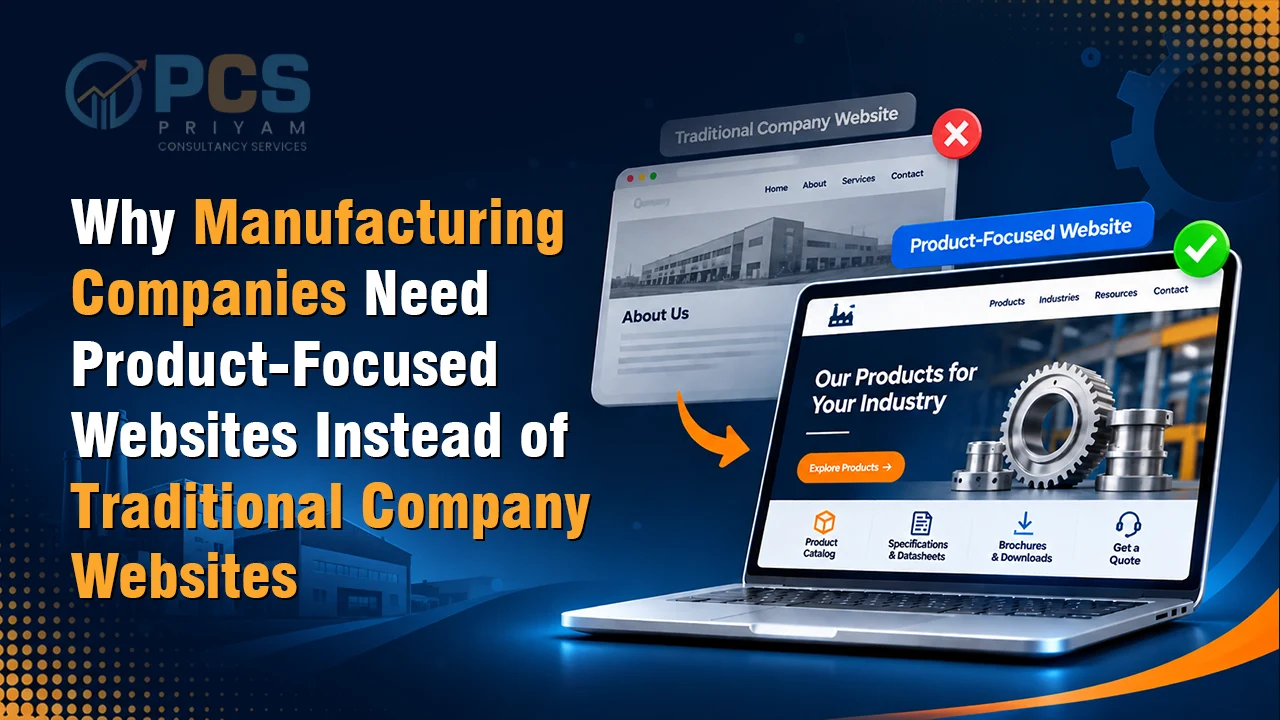
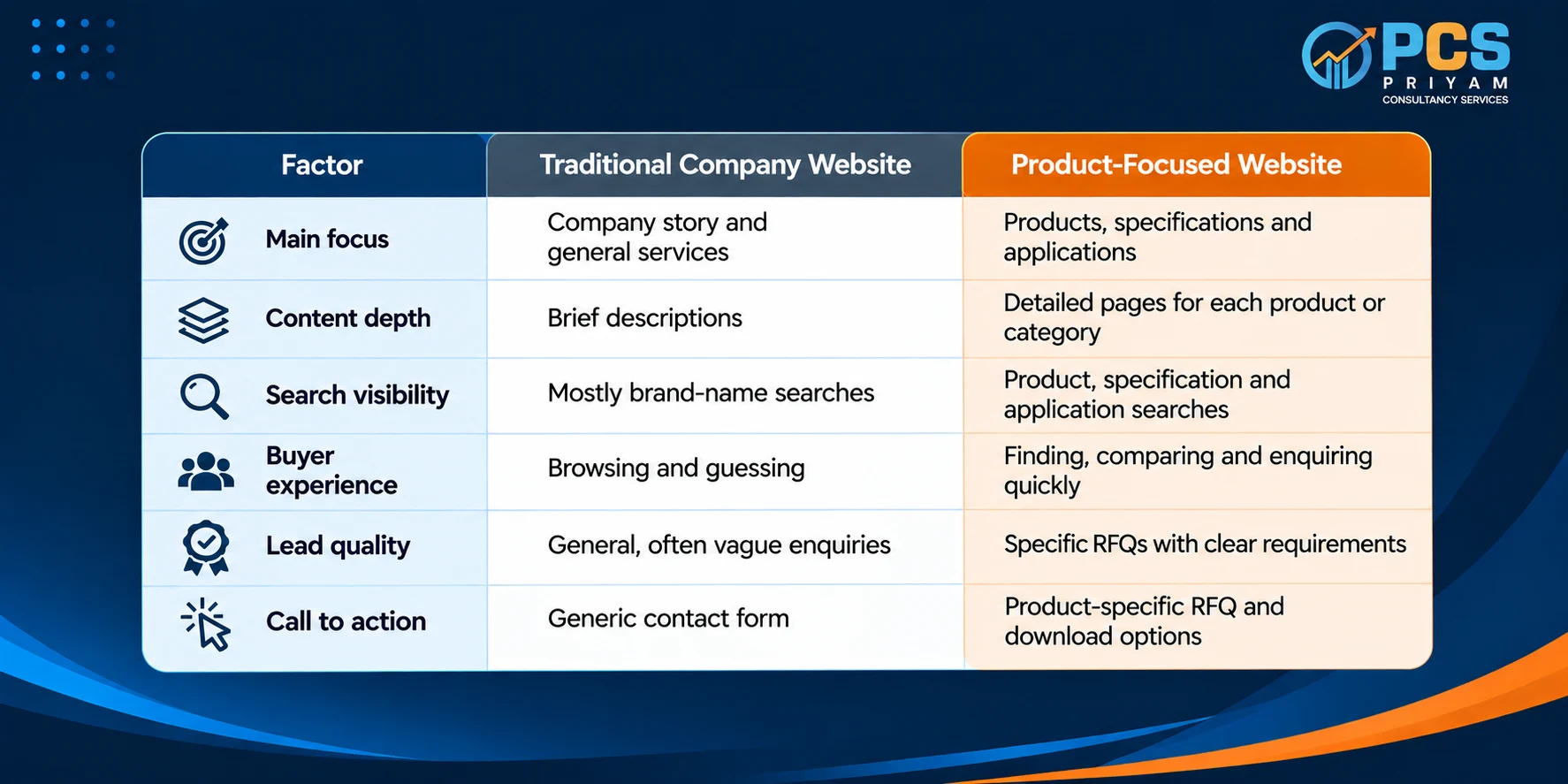
The conventional website for a manufacturing company is very similar to the brochures in the sense that it has a home page, an “about us” page, a general product page and contact us section. The emphasis is made on the history, infrastructure and philosophy of the firm.
What Is a Product-Focused Website for Manufacturers?
A product-focused website is built around the products and solutions a manufacturer offers. Each product or category has its own page with specifications, applications, materials, certifications, images, downloads and a quotation request option.
In short, if someone asks “what is a product-focused website?”, the answer is a site organised around what buyers want to evaluate and purchase, not around the company’s story. This is the basis of modern website design for manufacturers and effective B2B website design.
Why Do Traditional Company Websites Fail Industrial Buyers?
Industrial buyers need specific technical and commercial information. Traditional websites fail them in four ways:
- Lack of technical information: dimensions, materials, tolerances, standards, or datasheets.
- Products that are hidden away: Products exist on one page or are buried within the menus.
- Vague language: Examples of vague statements include “quality products at competitive prices”.
- No clear path ahead: The quotation option is not available, only the generic contact us page.
How Do Industrial Buyers Search for Products and Suppliers Online?
In most cases, industrial buyers look for products according to their need rather than the business name. They enter the names of products, parts, materials, specifications or applications like “stainless steel flanges supplier” or “cable assemblies for industrial automation.”
A single general page cannot match these searches, but separate pages for each product and application can. This is why manufacturing SEO involves building effective product pages.
Buying decisions often involve several people. An engineer validates specifications, procurement compares suppliers and commercial terms, and quality or project teams assess compliance and delivery capability. A product-focused website should give each of them specific technical and commercial information.
Which Product Page Elements Help Manufacturers Win Enquiries?
Buyers often ask: what should a manufacturing product page include? A good manufacturing product page should have:
- Product name along with a short, clear description
- Product specifications, measurements, materials, and tolerances
- Product standards and certifications
- Applications and industries using the product
- Pictures, drawings, or video clips of the actual product
- Datasheet or catalogue download option
- Minimum order quantity and lead time, if possible
- FAQs answering common consumer queries
- A clearly-visible RFQ form/button
In the above context, what is an RFQ form? RFQ (Request For Quotation) form is basically an online form where the buyer sends his requirements, such as product type, quantity, specifications, and delivery destination, so that the supplier gets all the necessary information to make an accurate quotation.
Yes. Well-structured product pages give search engines clearer context about your products, specifications and applications. When they offer useful, unique information that matches search intent, they can improve your chances of appearing in relevant product-specific searches.
Structured, unambiguous product information also helps AI-powered search systems interpret product attributes, applications and specifications. Clear headings, consistent terminology and accessible datasheets make your content easier to understand and quote.
They frequently will. An RFQ that requires the client to provide information regarding quantities, specifications, and deadlines is well suited for detailed product pages that draw buyers who already have a specific need in mind.
For the industrial manufacturer’s website, the most effective way to structure is a combination of all the above structures, but the navigation should be based on buyer’s thought process. A feasible structure will be as follows:
Product Categories: Navigation structure; eg fasteners, valves or cables.
Product Pages: One page per product or product line.
Industry/Application Pages: These pages will showcase products according to their industry application like automotive, telecom, infrastructure etc.
Supporting Pages: About Company, Quality, Certifications, Case Studies and Contact us.
For the industrial manufacturer’s website, the most effective way to structure is a combination of all the above structures, but the navigation should be based on buyer’s thought process. A feasible structure will be as follows:
What Mistakes Do Manufacturers Make When Building Product Websites?
Common errors involve sparse product pages, lack of specification details, difficult navigation, slow-loading pages, poor mobile optimization, and weak calls to action with no RFQ feature. These basic improvements will not only enhance user experience but also improve searchability.
How Can Manufacturers Move from a Company Website to a Product-Focused One?
You do not need to rebuild everything at once. Start by auditing your current site, then prioritise your best-selling products, rebuild those pages with specifications and RFQ options, group products into clear categories, and track organic traffic, datasheet downloads, RFQ submissions and conversions.
When Should a Manufacturer Work with a Website Development Partner?
Think of engaging a partner in case when your site is no longer representing your product range, you have low or unqualified inquiries, or there is not enough time in your team to engage in designing the site content and structure, SEO. Someone specializing in B2B marketing for manufacturers knows how buyers in industry behave and will design the webpages accordingly.
Priyam Consultancy Services is assisting manufacturers in creating professionally designed sites, product-oriented with the right structure and SEO, which will help buyers find your products and make the qualified inquiry.
Conclusion
A traditional company website tells buyers who you are. A product-focused website shows them what you manufacture, whether it meets their requirements and how to request a quotation. That difference often decides whether a visitor becomes a lead.
By organising your website around your products, adding clear specifications and an RFQ option, and structuring content for search engines and AI-powered search, you create a more dependable source of qualified enquiries. If you want to move from a brochure-style site to one built for B2B lead generation, Priyam Consultancy Services can help you design and structure a website that attracts the right buyers.
Frequently Asked Questions