
AI Search Optimization: How to Get Your Business Found in ChatGPT, Gemini and Google AI Search Search no longer ends...
Today, businesses across industries understand the importance of building a strong digital presence. Companies are investing in websites, content, SEO, and digital marketing with the expectation that stronger online visibility will lead to consistent business growth. On the surface, many of these efforts appear successful — rankings improve, traffic increases, and reports show positive numbers.
However, for many businesses operating in the B2B space, the actual business impact still feels limited. Despite continuous SEO efforts, enquiries remain inconsistent, sales conversations do not increase as expected, and the pipeline often fails to reflect the growth shown in analytics reports.
Despite months of SEO investment, enquiries remain inconsistent, sales conversations do not increase, and the pipeline does not move as expected. This often leads companies to question whether SEO is actually delivering value.
The reality is that the problem is rarely SEO itself. In most cases, the challenge lies in applying the wrong strategy to a B2B business environment.
Most B2B companies do not have an SEO problem. They have a strategy problem that looks like an SEO problem.
Neglecting mobile optimization — Most B2B businesses assume their buyers are on desktop. The data increasingly says otherwise. Decision-makers research on mobile, compare vendors on mobile, and often make first contact on mobile. A website that is not fully optimized for mobile is losing rankings and losing buyers simultaneously — yet this remains one of the most commonly overlooked gaps in B2B SEO.
Optimize for traffic, not for buyers — Chasing high-volume keywords without asking who is searching for them is the most common strategic mistake. A logistics company ranking for “what is supply chain management” attracts students and researchers — not procurement decision-makers. High traffic with the wrong audience is a distraction, not an asset.
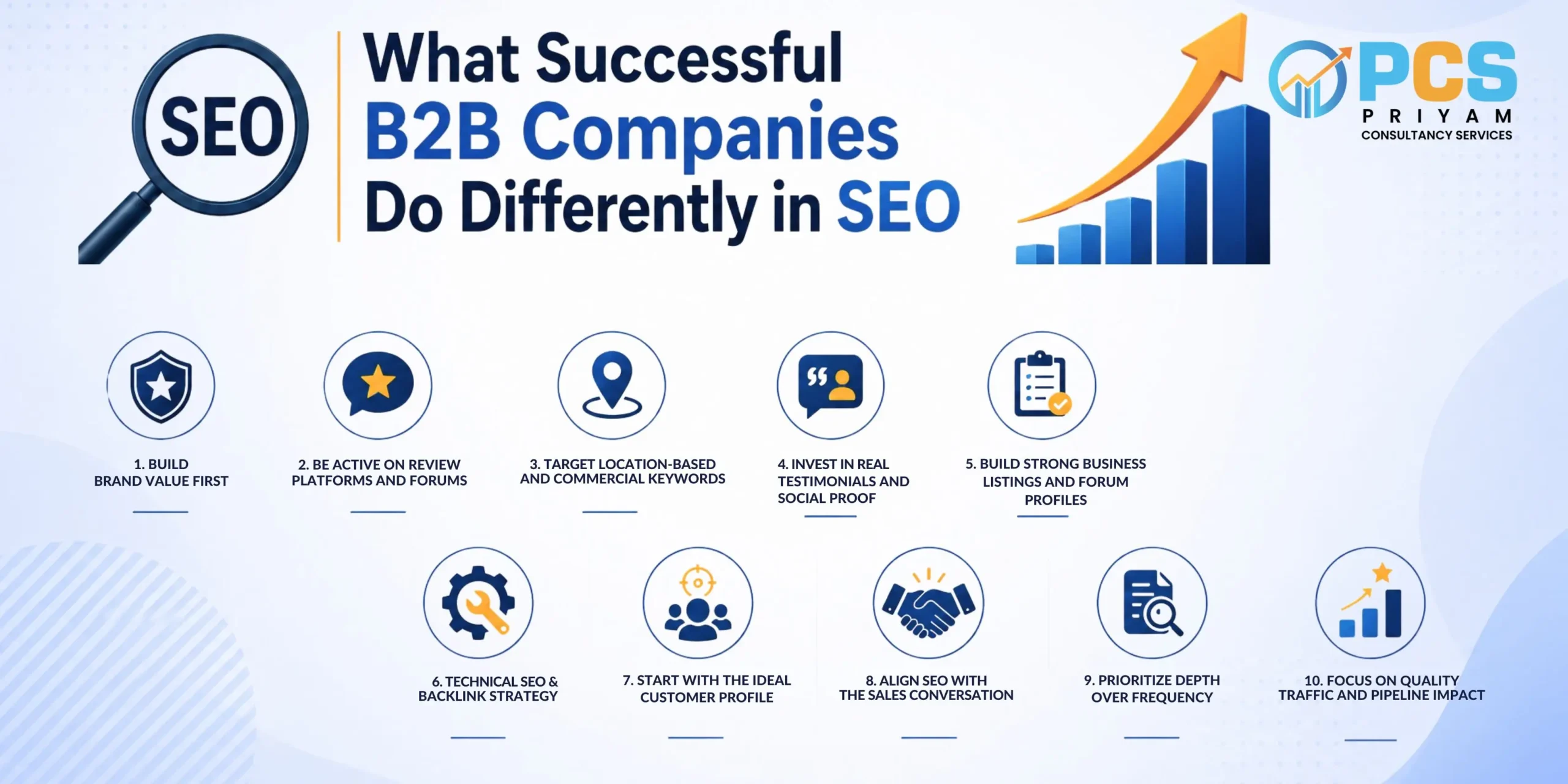
Presence on review platforms improves credibility and visibility.
Presence on platforms like Google Reviews, Trustpilot, and Clutch is not just a credibility exercise — it strengthens brand trust, improves click-through rates, and supports local SEO visibility. Businesses with strong, consistent review profiles often create stronger confidence among buyers during the vendor evaluation process.
Target location-based and commercial keywords.
Successful B2B companies do not just target broad industry terms. They get specific — by geography, by buyer type, and by commercial intent. Ranking for “B2B digital marketing services in Chennai” or “HR consulting firms for mid-size companies” delivers far more qualified traffic than ranking for generic category terms.
Invest in real testimonials and social proof.
Real-time testimonials — written, video, and case-based — serve both as trust-builders and as SEO content. They answer the questions buyers are quietly asking before they make contact.
Build strong business listings and forum profiles.
Consistent business listing submissions across directories, industry platforms, and local search tools build the off-page authority that supports rankings. An incomplete or inconsistent listing profile is a silent drag on SEO performance.
Keyword strategy in B2B is not about finding the searched words. It’s about finding words that show people are ready to buy.Good B2B SEO strategies are about reaching customers when they are making decisions.For example someone searching for “how to reduce software development costs” is looking for a solution to a business problem.This search shows they are more likely to buy than someone searching for a term like “software development.”
Using keywords that show people are aware of a problem helps businesses connect with decision-makers who are already looking for solutions to that problem.These keywords help businesses target people who’re closer, to making a purchase.B2B businesses can benefit from focusing on keywords with buyer intent.The goal is to reach customers at the right time with the right information.
Build pillar content around your core services.
For a company offering B2B digital marketing services, a pillar page on “B2B Lead Generation Strategies” supported by cluster articles on SEO, PPC, and LinkedIn creates a content ecosystem that signals deep expertise to both Google and your buyers.
The best companies know that a good Business to Business search engine optimization plan works well when it is part of a bigger B2B digital marketing plan. When you use search engine optimization and pay per click together businesses can find out which keywords are working well through the data from their campaigns. This helps them focus on the keywords for their regular website traffic.
At the time websites like LinkedIn help make search engine optimization efforts better by getting valuable content to more people and bringing back visitors who are more likely to buy something. Following up with people who have visited a website before makes this approach even stronger because most Business to Business buyers look at a brand before they decide to buy.
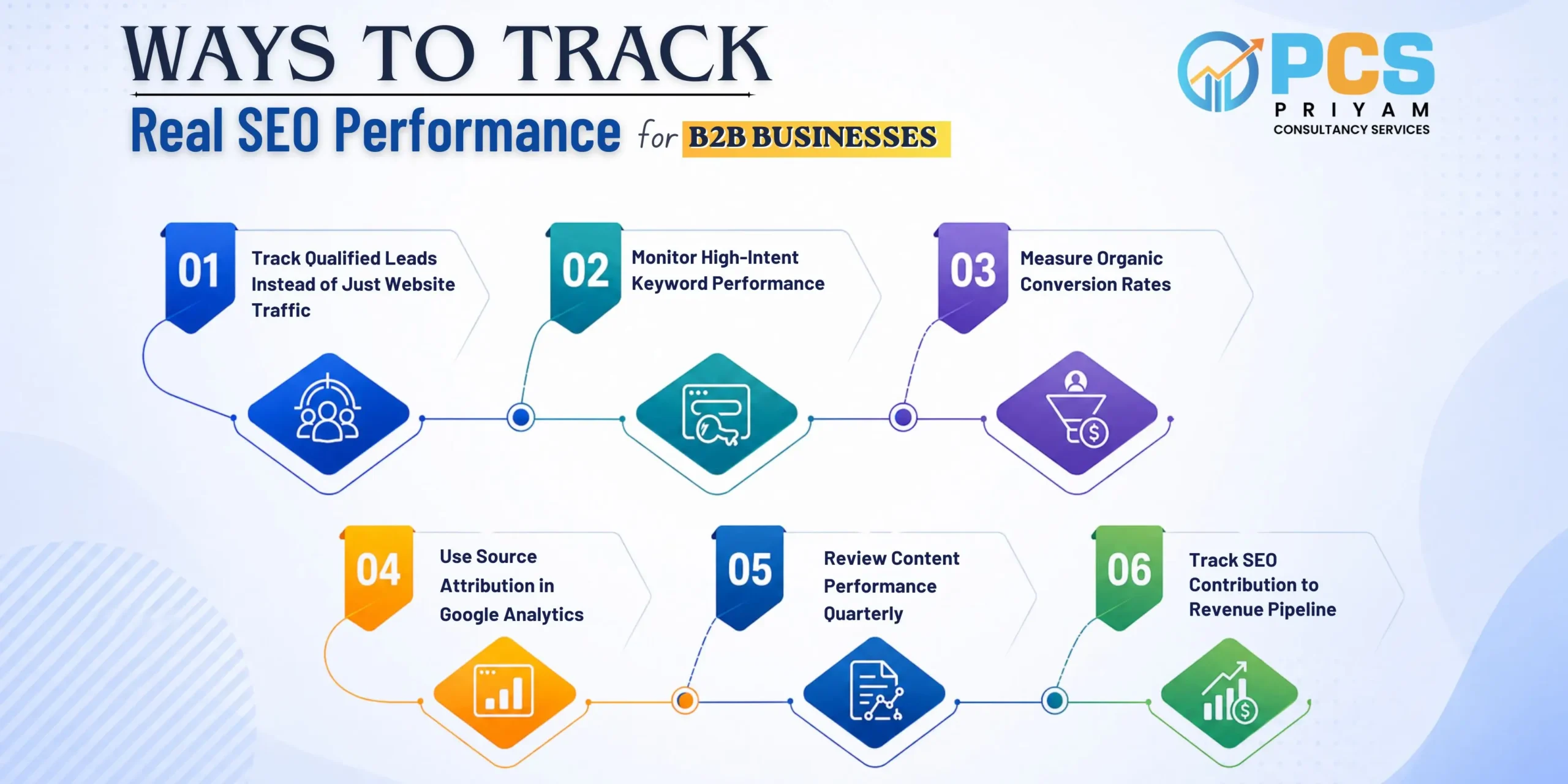
2.Monitor High-Intent Keyword Performance
Focus on rankings for decision-stage keywords that attract potential buyers rather than only informational search terms.
3.Measure Organic Conversion Rates
Analyze how effectively your SEO traffic converts into leads, opportunities, or sales conversations.
4.Use Source Attribution in Google Analytics
Set up accurate tracking to identify which organic pages and keywords contribute most to conversions and revenue.
5.Review Content Performance Quarterly
Evaluate which pages generate engagement, leads, and conversions over time, then optimize or expand high-performing content.
6.Track SEO Contribution to Revenue Pipeline
Measure how organic search supports the sales pipeline by connecting SEO performance with CRM and lead management data.

Most Business to Business search engine optimization plans do not work because they have the goals. They use metrics to measure success and they do not really understand how buyers behave. Companies that do well with search engine optimization do things differently. They really know their audience. Create content that helps build trust over a long time. This helps people make decisions to buy. They also think of search engine optimization as a way to grow their business over a time, not just something to do every month.
A good B2B SEO plan is not about getting people to visit your website. It is about getting the right people to visit and turning them into customers. It is about helping your business grow consistently.
If you are getting a lot of visitors to your website but it is not helping your business you need to make a plan. You need a Business to Business marketing plan that really understands what your buyers want and what you want to achieve. At Priyam Consultancy Services we help businesses with marketing and search engine optimization. We want to help you get results, from your website like getting more leads and growing your business over time. We help businesses make search engine optimization plans that really work. We help them turn people who are just looking into buyers.
B2B SEO strategy is built around longer buying cycles, multiple decision-makers, and high-value conversions. Unlike B2C SEO which targets impulse-driven buyers, B2B digital marketing through SEO focuses on building trust, answering complex buyer questions, and staying visible across every stage of a research-heavy decision process.
Most B2B SEO services begin showing meaningful traction between 3 to 6 months, depending on competition, domain authority, and content consistency. Unlike paid ads, SEO compounds over time — the longer the investment, the stronger and more cost-effective the returns become.
Start with commercial intent and problem-aware keywords that reflect what your buyers search for when they are actively evaluating solutions. A strong SEO strategy maps keywords across all three buying stages — awareness, consideration, and decision — rather than targeting only high-volume terms that attract the wrong audience.
Google Reviews, Clutch, Trustpilot, and consistent business listings are not just credibility tools — they are active ranking signals. A strong review profile across these platforms improves local and industry-specific search visibility and directly influences buyer trust when they land on your website or Google Business Profile.
SEO and paid campaigns work best when integrated as part of a unified B2B digital marketing strategy. PPC reveals which keywords convert fastest, giving your organic strategy a data-backed direction. Retargeting keeps your brand visible to SEO-driven visitors who did not convert on their first visit. Together they shorten the sales cycle and increase overall pipeline quality through coordinated B2B digital marketing services.
Move beyond rankings and traffic. The right metrics for any B2B SEO services investment are qualified leads from organic search, conversion rates on key landing pages, keyword rankings segmented by buyer intent, and organic share of voice against competitors. Tracked through Google Analytics with proper attribution, these metrics reveal the true business impact of your SEO efforts.

AI Search Optimization: How to Get Your Business Found in ChatGPT, Gemini and Google AI Search Search no longer ends...
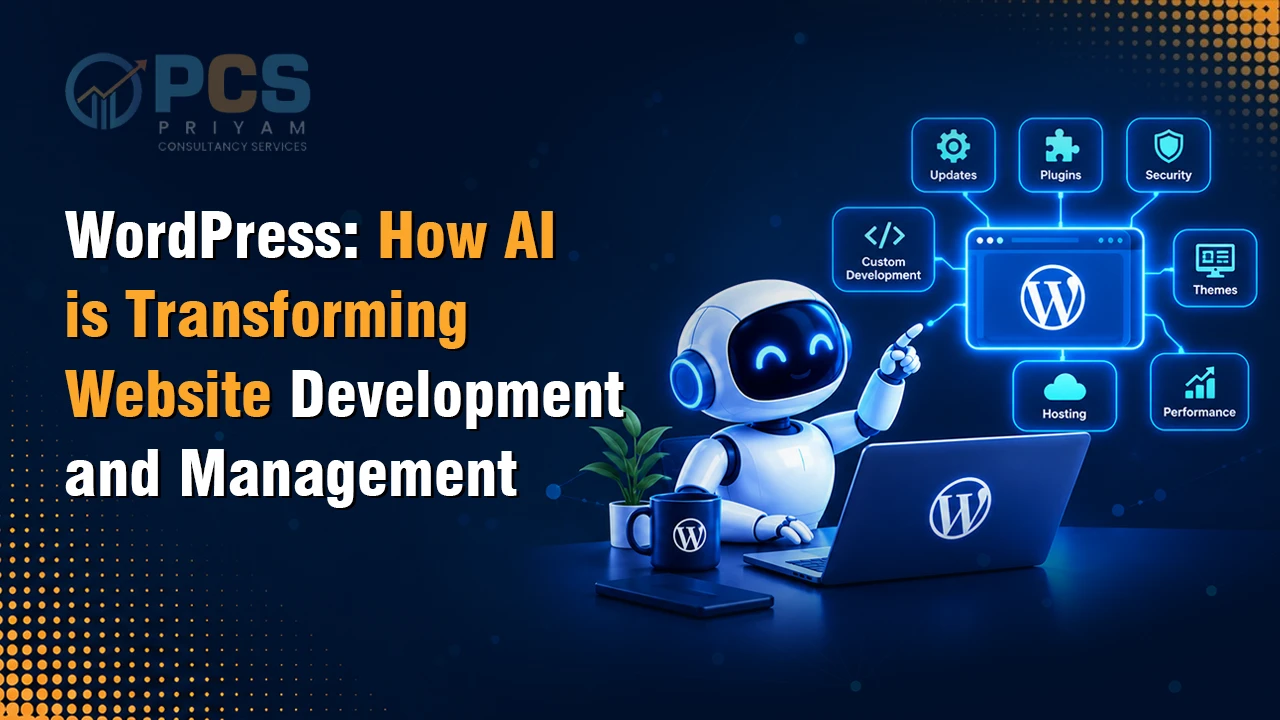
WordPress: How AI Is Transforming Website Development and Management WordPress AI website development has moved from a collection of third-party...

HR Consulting Services: What Growing Businesses Actually Need Most founders don’t think about HR until something forces them to —...