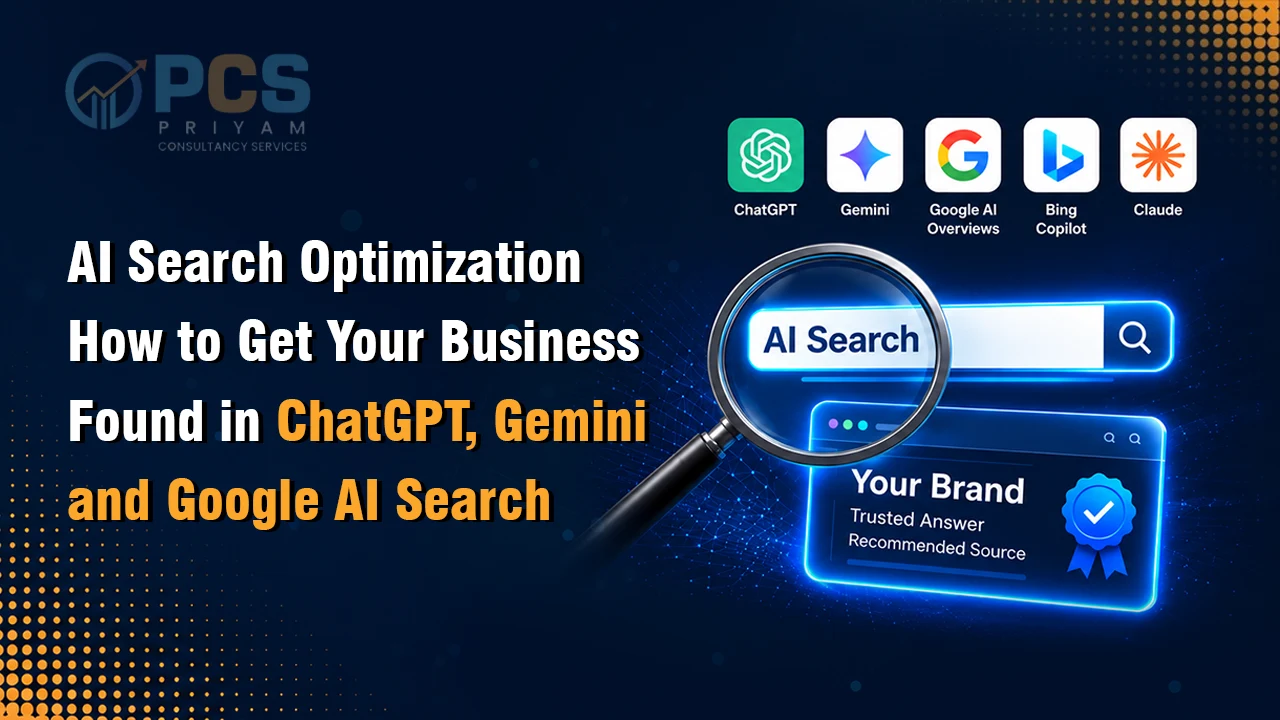
AI Search Optimization: How to Get Your Business Found in ChatGPT, Gemini and Google AI Search Search no longer ends...
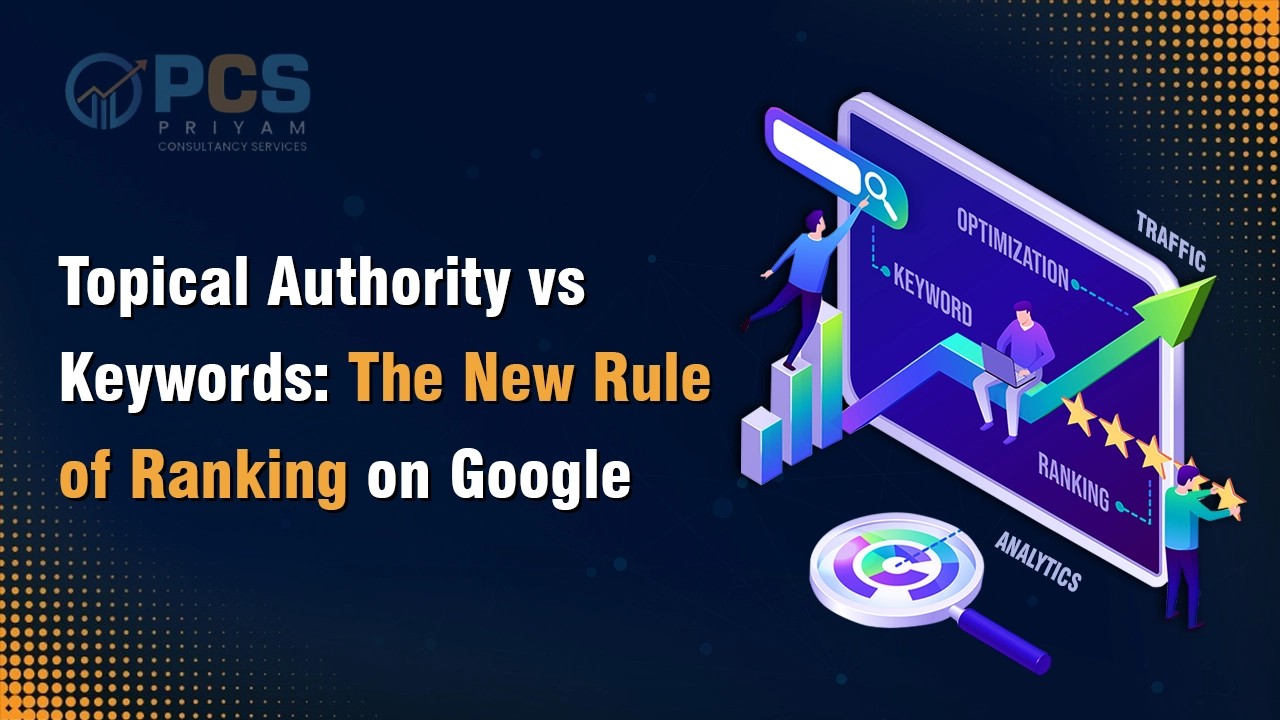
Search engine optimization is not about inserting keywords into what you write and waiting to see if you get a good ranking. Google has become smarter and a lot better over time. Now it cares more about how good your content is, if it is relevant and if you know what you are talking about. So companies that still do things like stuffing keywords into their content are not getting as much out of it as they used to.
Now the thing that really makes a difference is being an expert on a topic, in search engine optimization. Of just looking at individual pages Google looks at how well a website covers a whole subject. So it is more important to have a lot of information about one thing than to have a lot of content that’s not very deep.
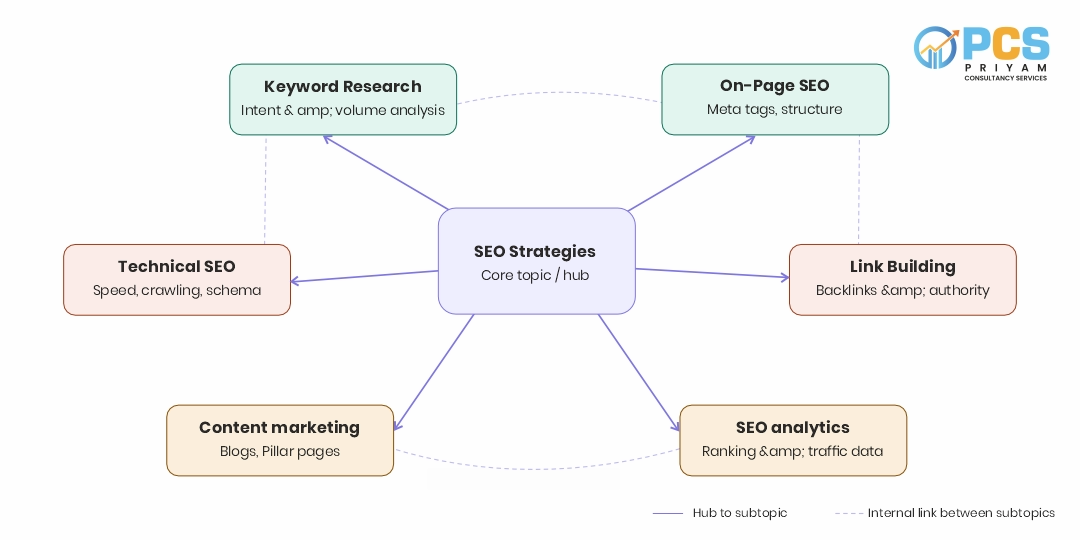
When we talk about topical authority in SEO , we are talking about how well a website shows that it really knows a lot about a specific subject. It is not about using one keyword over and over but about covering a whole topic with many different pieces of content that are all connected to each other.
For example let us say a website is all about SEO strategies. This website might have a lot of content on things like researching keywords, making sure the pages on the website are optimized for the technical side of Search Engine Optimization and marketing with content. Also all these articles are linked together on the website to make a group of content. Moreover , Google looks at this structure. Seems that the website is not just about a topic but that it is really good at it. So the website has a better chance of showing up high in the results when people search for things that are related to the topic. This means the website can show up for different searches, not just one.
Moreover , Google looks at this structure. Seems that the website is not just about a topic but that it is really good at it. So the website has a better chance of showing up high in the results when people search for things that are related to the topic. This means the website can show up for different searches, not just one.
Keywords are not obsolete. Their role has changed over time. In the past how high you ranked in a search depended a lot on how you used certain words. This led to people stuffing their content with keywords to get a ranking. This made the content bad and users did not like it.
Now Google cares more about what people’re looking for when they search and how relevant the content is. So to say the same thing over and over you should use the main keyword in a natural way: this is about being an authority on a topic and using related words.
Additionally , Google is also good at understanding words that mean the same thing. For example keywords like “topical authority in SEO” and “SEO strategies for authority building” are seen as similar. This change is good because it makes people who create content focus on answering questions that users have rather than just trying to please the search engine algorithms. Keywords and topical authority are still important and using the keywords and building topical authority can make a big difference.
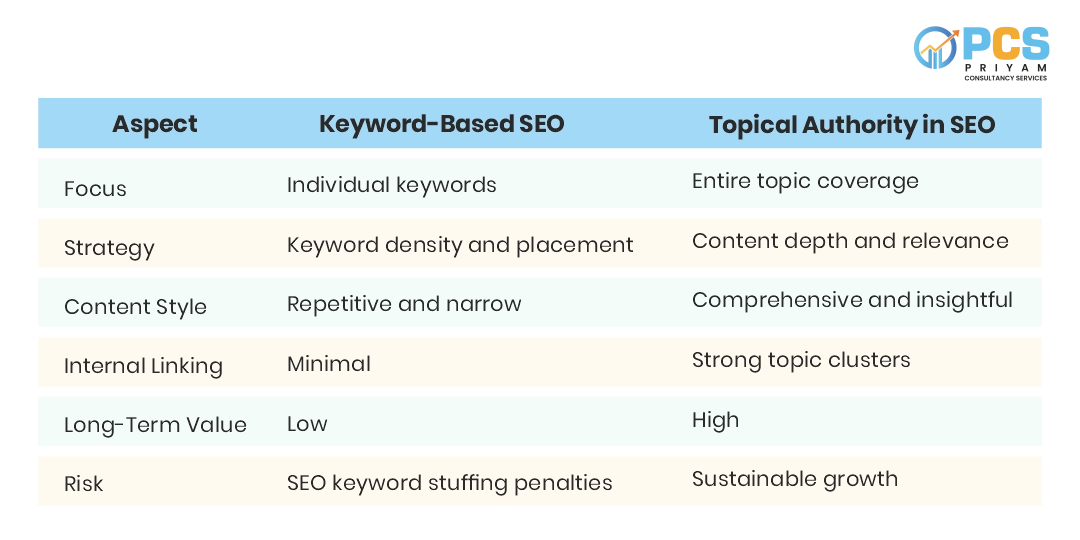
As shown above, topical authority offers a more future-proof approach. Meanwhile, keyword-based strategies are becoming less effective as algorithms evolve.
Additionally, depth signals expertise. When your content consistently covers multiple angles of a topic, Google perceives your site as a trusted resource. Therefore, your Topical Authority Score improves over time.
Meanwhile, publishing large volumes of thin or repetitive content can dilute your website’s value and negatively impact rankings.
Building topical authority requires a strategic approach rather than random content creation. Therefore, businesses must adopt structured SEO strategies that prioritize depth and relevance.
Develop a comprehensive guide around a core topic
Add supporting articles that cover subtopics in detail.
Connect related pages to strengthen context
Answer real questions your audience is searching for
Regularly publish high-quality, valuable content
In addition, monitoring your Topical Authority Score can help identify gaps in your content strategy.

Website A publishes 100 short blogs targeting different keywords with minimal depth.
Website B publishes 20 detailed, well-researched articles covering a topic comprehensively.
Initially, Website A may gain quick visibility. However, over time, Website B starts outperforming because:
As a result, Website B establishes stronger topical authority in SEO, leading to consistent and long-term traffic growth.
The shift from keyword-focused optimization to topical authority marks a significant evolution in SEO. While keywords still play an important role, they are no longer the primary driver of rankings.
Therefore, businesses must move beyond outdated practices like SEO keyword stuffing and focus on building depth, relevance, and expertise. Moreover, adopting modern SEO strategies centered around topical authority ensures sustainable growth and better search visibility.
In the long run, success in SEO depends not on how much content you produce, but on how effectively you cover a topic. At PCS, we help businesses build strong topical authority in SEO through strategic content planning, in-depth optimization, and result-driven SEO strategies that deliver long-term growth.

Topical authority in SEO is about how a website covers a specific subject. It is built by creating content that shows expertise and relevance in a niche. A websites topical authority shows how in-depth it covers a topic.
Keyword-based SEO is about optimizing pages for keywords. Topical authority is about covering a topic. This helps websites rank for related searches instead of just one keyword.
Yes keywords still matter.. Google looks at context and what users want more than keyword repetition. So using keywords naturally is more effective than stuffing them in.
A Topical Authority Score measures how well a website covers a subject. It looks at content depth, internal linking and relevance. This helps search engines see expertise in a niche.
Good SEO strategies include:
* Creating in-depth content
* Building clusters of content
* Using linking
* Publishing good content that aligns with what users want
Topical authority helps search engines understand expertise in a subject. This can help a website rank, for related keywords. It improves visibility. Drives consistent traffic.
AI Search Optimization: How to Get Your Business Found in ChatGPT, Gemini and Google AI Search Search no longer ends...
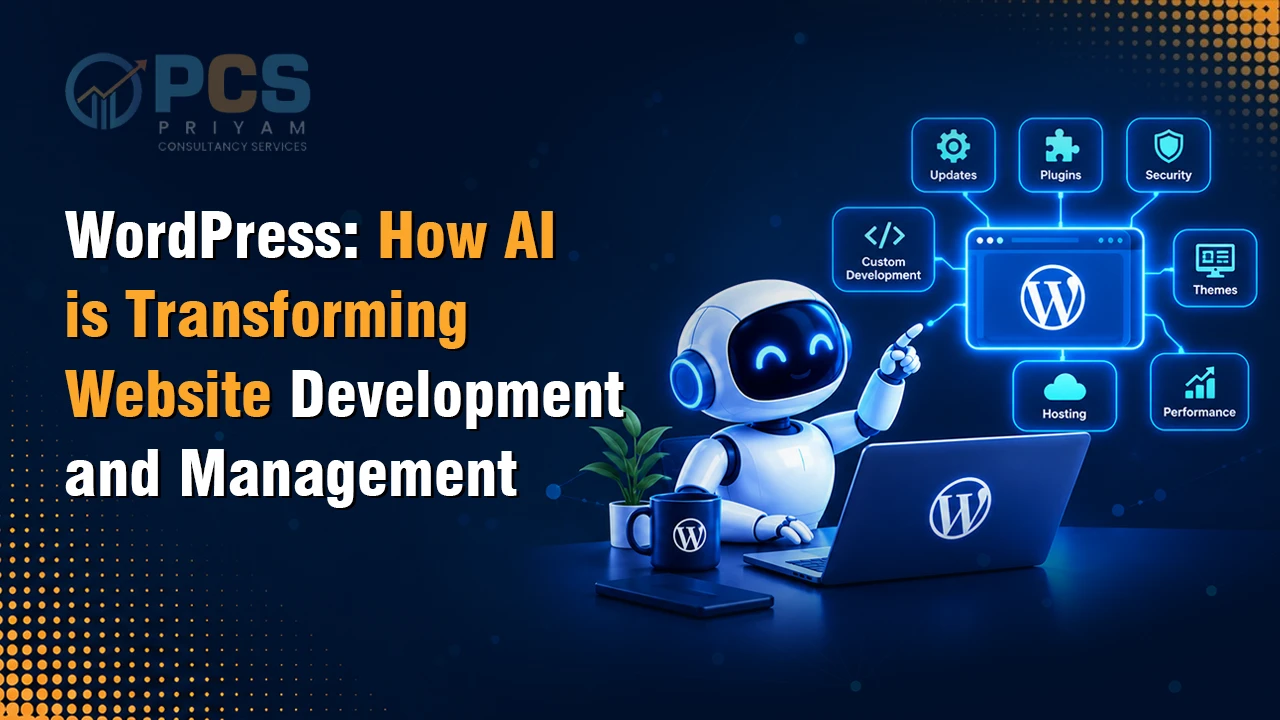
WordPress: How AI Is Transforming Website Development and Management WordPress AI website development has moved from a collection of third-party...

HR Consulting Services: What Growing Businesses Actually Need Most founders don’t think about HR until something forces them to —...