Can AI Really Run Your Recruitment Process? What It Automates (And What It Still Can’t)
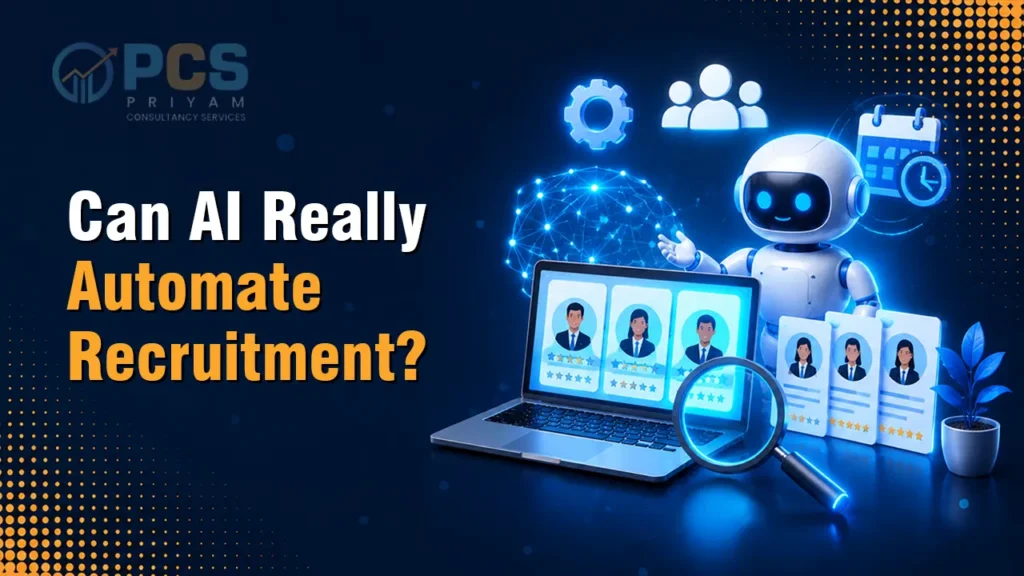
Can AI Really Run Your Recruitment Process? What It Automates (And What It Still Can’t) If you’ve been reading about AI in recruiting lately, you’ve probably seen bold claims about AI agents “running” the entire hiring process — sourcing, screening, scheduling, even decision-making. AI in recruitment and AI + HR automation are two of the most talked-about topics in HR circles right now, and it sounds impressive — but it also raises an honest question: is any of this actually true, or is it mostly hype? The reality in 2026 is more nuanced than either extreme. AI is increasingly automating significant parts of recruitment that used to consume hours every week — but there are also parts of hiring that remain firmly, and rightly, in human hands.This blog breaks down exactly where that line sits today — what AI agents can realistically automate, how mature interview scheduling actually is, where AI still falls short, and what businesses risk if they push automation too far. Key Takeaways Agentic AI can run multi-step recruitment tasks with less manual input — sourcing, screening, and scheduling — but that’s different from AI running the entire hiring process unsupervised. Sourcing, screening, and matching are where AI delivers the most value today, cutting hours of repetitive, low-judgment work. Interview scheduling is one of the most mature areas of recruitment automation — but even top tools still need human fallback in roughly 1 in 5 cases. Culture fit, final hiring decisions, and negotiation still require human judgment, and candidate trust in AI-only decisions remains low. Ungoverned automation carries measurable risk — most companies already let AI reject candidates without human review, even while admitting they’re worried about bias. The right approach isn’t full automation — it’s being deliberate about where AI-assisted hiring decisions help, and where a person needs to stay involved. Agentic AI vs. Basic Automation: What’s Actually Being Claimed Most people picture two extremes when they hear “AI recruiting” — either a chatbot that suggests a resume, or a fully autonomous system making hiring decisions with no humans involved. Neither is accurate.The real shift in AI in recruitment process work is what’s called agentic AI. Unlike basic automation, which follows a fixed rule (“if resume contains keyword X, shortlist it”), agentic AI can take a goal, break it into steps, act on those steps, check the results, and adjust — all with far less manual input from a person. Instead of one tool doing one task, it’s closer to a small system handling a connected workflow: sourcing candidates, ranking them, and flagging the strongest matches for review. That’s the distinction worth understanding before anything else: AI recruiting tools today aren’t just faster spreadsheets — they’re part of a broader shift toward digital HR and HR technology, where multi-step parts of the process run largely on their own, with a person reviewing the output rather than performing each step manually. How AI Agents Are Improving AI in Recruitment — Sourcing, Screening & Matching This is where AI has made the most visible difference. Recruiters have traditionally spent enormous amounts of time on repetitive, high-volume tasks — and this is exactly where AI agents perform best. It’s also part of a broader move toward skills-first hiring, where candidates are evaluated on actual capability rather than degrees or job titles alone. Sourcing: Depending on the tools and integrations available, AI can search candidate databases, job platforms, and other permitted sources to identify potential matches based on skills and experience — useful for both high-volume roles and targeted, niche recruitment where the right match matters more than the number of applicants. The exact reach depends heavily on which platforms and data sources a given system is actually connected to. Screening: Instead of manually reading hundreds of resumes, AI can rank and shortlist candidates against predefined, job-relevant criteria in minutes. Matching: AI compares candidate profiles against role requirements more consistently than manual review, reducing the chances of a strong candidate getting missed simply because a resume was skimmed too quickly. For businesses evaluating AI recruiting companies or tools, this is usually the first and most valuable place automation gets applied — it removes hours of low-judgment work without touching the decisions that actually require a person. Can AI Automate Interview Scheduling? Here’s What Actually Works Agentic AI vs. Basic Automation: What’s Actually Being Claimed Scheduling has long been one of recruitment’s most frustrating bottlenecks — endless email threads trying to find a time that works for everyone. This is one of the most mature and reliable areas of recruitment automation today.AI scheduling tools can check calendar availability, coordinate interview times, send invitations and reminders, and handle many routine rescheduling requests with minimal recruiter involvement. For high-volume hiring in particular, this alone can save several hours a week that used to go entirely into back-and-forth coordination. But “mature” isn’t the same as “solved.” Even leading agentic scheduling platforms report around 80% autonomous resolution — meaning roughly 1 in 5 scheduling cases still needs a person, especially for multi-timezone panels, last-minute interviewer changes, or conflicting preferences. Enterprise reschedule rates still run in the 14–15% range, and for global teams, a single reschedule in a multi-timezone panel can undo the coordination effort entirely. Adoption is also uneven industry-wide: most talent acquisition teams have adopted AI in some form, but only a small share have production-ready, fully agentic scheduling systems — many are still stuck piloting tools that haven’t scaled past the experiment phase. The practical takeaway: build in a human fallback, because a scheduling error — like a senior candidate showing up to an empty video call — is exactly the kind of mistake that’s cheap to prevent and expensive to explain. Where AI in recruitment Still Falls Short — Judgment, Culture Fit & Final Decisions This is the part that often gets glossed over in AI recruiting marketing. There are parts of hiring AI simply isn’t built to handle well: Culture and team fit: AI can help structure behavioural evidence against
Succession Planning in HR: The Internal vs. External Hiring Decision That Shapes Your Leadership Future
Succession Planning in HR: The Internal vs. External Hiring Decision That Shapes Your Leadership Future Introduction Strong organizations are not defined only by great leaders — they are defined by their ability to continuously build the next generation of leadership.That is where succession planning in HR becomes a critical driver of long-term business success. Whether it is preparing future CXOs, strengthening internal leadership pipelines or aligning with broader HR strategy and planning, organizations today cannot afford to treat succession as a reactive process.At its core, succession planning in HRM ensures that leadership transitions do not disrupt momentum. Instead, they become opportunities for growth, stability and strategic evolution. In this blog, we break down the internal vs external hiring debate, explore what effective succession management plans look like and provide a practical framework for building a future-ready workforce management strategy. What Is Succession Planning in HR? Why Most Companies Get It Wrong So, what is succession planning in HR? Succession planning in HR is the process of identifying, developing and preparing employees to take on critical roles when they become vacant — due to retirement, resignation, promotion or unexpected exits. While the concept sounds straightforward, execution is where most organizations struggle. Common Mistakes in Succession Planning Mistake 1 — Treating it as a one-time exercise — Many organizations create a plan and revisit it only when a vacancy arises. In reality, succession planning in HRM must be continuous, evolving alongside business needs. Mistake 2 — Focusing only on top leadership —Limiting succession planning to CXO roles creates vulnerabilities across middle management. Effective workforce management requires leadership continuity at every critical level.Mistake 3 — Confusing replacement with succession — Replacement is reactive — it fills a seat. A true succession management plan is proactive: it identifies and develops talent well before the need arises, so candidates arrive prepared rather than scrambling to catch up. Mistake 4 — Overlooking high-potential talent — Future leaders are often missed because they are not yet in senior roles. Strong succession planning identifies and nurtures high-potential employees early. A well-designed succession management plan ensures leadership continuity is built into the organization’s DNA — not handled as a last-minute fix. Internal Talent vs External Intelligence — Making the Right Leadership Choice One of the most important decisions in succession planning in HR is choosing between internal promotion and external hiring. There is no one-size-fits-all answer. The decision must align with your business stage, culture and strategic goals. The Case for Internal Hiring Culture continuityInternal candidates understand the organization’s values, systems and people dynamics. Stronger retention and moralePromotions signal growth opportunities, strengthening employee engagement and loyalty. Faster transitionInternal hires require less onboarding and adapt quickly to leadership roles. Lower riskTheir performance, strengths and gaps are already known, reducing uncertainty. Best suited when:● Culture is a key competitive advantage● Roles require deep institutional knowledge● A strong internal talent pipeline exists The Case for External Hiring Fresh perspective External leaders challenge existing thinking and introduce new approaches. Specialized expertiseCritical during transformation phases like digital adoption or expansion. Business reinventionExternal hires can accelerate change when organizations need a reset. Diversity of thoughtBrings varied industry exposure and innovative problem-solving.. Best suited when:● Strategic transformation is required● Internal pipeline lacks readiness● New capabilities are needed The Smart Approach — Blending Both The most effective HR strategy and planning models combine internal development with external benchmarking. This include:● Mapping internal talent against future needs● Using HR analytics to assess readiness and skill gaps● Maintaining external talent pipelines● Aligning hiring decisions with long-term workforce planning goals This balanced approach ensures agility without compromising stability. One important note: Research consistently shows that external CXO hires carry a significantly higher failure rate in the first 18 months compared to internal promotions. The onboarding curve, cultural fit challenges and time-to-effectiveness are all steeper for external leaders — a cost that organizations must weigh carefully before bypassing their internal pipeline. CXO Succession Planning — Preparing for Leadership at the Highest Level CXO succession planning represents the most critical layer of succession planning in HR. Leadership transitions at this level directly impact business continuity, investor confidence and organizational stability.Many organizations now partner with experts offering CXO Succession Planning Services to ensure structured and unbiased decision-making. What Effective CXO Succession Planning Looks Like 1,Leading organizations typically plan 3–5 years in advance, though timelines vary by industry and organizational complexity. 2. Multiple successorsA pool of candidates reduces dependency on a single individual. 3. Structured assessmentsEvaluation across leadership, strategy, decision-making and stakeholder management. 4. Board involvementSuccession at the CXO level is a governance priority, not just an HR responsibility. 5. Balanced transparencyClear communication without overpromising roles. 6. External benchmarkingComparing internal talent with external leaders ensures informed decisions. Poor CXO succession decisions can lead to financial loss, cultural disruption and talent attrition. Getting it right is a strategic necessity. Building a Future-Ready Workforce Management Strategy Succession planning is a core component of effective workforce management and broader HR strategy and planning. Step 1 — Identify Critical Roles Focus on roles that significantly impact operations and growth. Step 2 — Evaluate Talent Pipeline Use tools and HR analytics to identify high-potential employees and readiness gaps. Step 3 — Develop Future Leaders Create structured development plans including mentoring, cross-functional exposure and leadership training.Step 4 — Establish Review Cadence Regular talent reviews ensure plans stay relevant and updated.Step 5 — Align with Recruitment Strategy Integrate internal development with external hiring to strengthen workforce planning. Step 6 — Measure and Improve Track metrics like promotion rates, retention and time-to-fill roles to refine your strategy.A strong workforce strategy ensures organizations remain resilient, agile and prepared for change. Case Study — Succession Planning in Action: Balancing External Expertise and Internal Growth As organizations scale, leadership continuity becomes a defining factor in sustaining momentum. Priyam Consultancy Services partnered with two fast-growing SaaS companies—one in IT and another in Health Tech—to address critical leadership transitions using a structured and strategic succession planning approach.In the first scenario, an IT SaaS company was experiencing
Why HR Consultancy in Coimbatore Is the Smartest Move for Scaling Businesses
Why HR Consultancy in Coimbatore Is the Smartest Move for Scaling Businesses Coimbatore has long been one of South India’s most resilient and evolving business cities. Long known as a major textile and manufacturing hub, the city has steadily expanded over the past decade into IT, engineering, and a thriving startup ecosystem. From SIDCO estates to software parks, businesses in Coimbatore are growing faster than ever — and with that growth comes a rising need for smarter, more structured people management. Yet behind every thriving business is a challenge that rarely makes the headlines — managing people effectively. Finding the right talent, processing payroll accurately, staying compliant with employment laws, keeping employees engaged, and maintaining a healthy workplace culture are not simple tasks. For most businesses in Coimbatore, especially smaller and mid-sized ones, these responsibilities stretch internal teams thin. Hiring mistakes pile up, compliance gets overlooked, and business leaders find themselves buried in paperwork rather than focused on growth. This is where HR consultancy in Coimbatore becomes a game changer. But for most business owners, the full scope of what an HR consultancy actually does — and how deeply it can impact growth — is far greater than they realise. What Does an HR Consultancy Actually Do? Before exploring the growth connection, it is worth clearing up a common misconception: many business owners think HR consultancies simply help find candidates. In reality, a full-service HR consultancy in Coimbatore covers the entire employee lifecycle — from the moment you decide to hire someone to the systems that keep that person productive and engaged for years. Here is what a professional HR solutions in Coimbatore partner like PCS typically delivers: Recruitment Services — PCS handles end-to-end talent acquisition, covering job profiling, candidate sourcing, structured screening, interviews, and smooth onboarding. The focus is on culture-fit and long-term alignment, using a consultative approach to find the right talent — not just fill the vacancy. Unlike generic recruitment agencies in Coimbatore that push resumes, PCS maps every candidate to your actual business needs, your team culture, and your growth plans.Payroll Management — PCS offers end-to-end payroll services that ensure tax compliance, accurate deductions, and timely payments — freeing you from the administrative burden and reducing the risk of errors. Every statutory requirement — PF, ESI, TDS, gratuity — is handled correctly, because a payroll mistake is never just an inconvenience. It damages employee trust and exposes your business to legal penalties.HR Policy Development — PCS’s policy management services are crafted by HR and legal experts to ensure they meet local labour laws, industry standards, and your internal values — with every policy customised to be legally sound yet people-friendly. This covers leave policies, codes of conduct, grievance mechanisms, performance frameworks, and employment contracts tailored to your industry.HR Strategy — Whether you are hiring your first employee or scaling rapidly, PCS helps set up HR foundations like org structure, role mapping, goal-setting frameworks, and people policies that grow with your business. For leadership teams, this strategic layer is often the difference between scaling smoothly and scaling chaotically. How HR Consultancy Directly Fuels Business Growth Now, here is the logic that most business owners miss. Growth, at its core, is about execution. And execution depends entirely on people. Consequently, any friction in your people processes — slow hiring, wrong hires, payroll errors, unclear policies, compliance gaps — directly slows down your business. Therefore, fixing those friction points through professional HR services in Coimbatore is not a support function. It is a growth strategy. Let’s break it down: Faster hiring means faster execution. When a business wins a new contract or launches a new division, the ability to staff up quickly is a direct competitive advantage. The best HR consultancy in Coimbatore builds a bench of pre-qualified candidates before you even post the job — cutting time-to-hire dramatically and keeping your growth timeline on track. Right hiring reduces costs. The cost of a bad hire — factoring in lost productivity, retraining, re-hiring, and team disruption — can easily equal six to nine months of that employee’s salary, according to industry benchmarks. As a result, experienced recruitment agencies in Coimbatore that use structured screening and behavioural assessments protect your business from one of its most expensive and invisible risks. Payroll accuracy builds trust. Employees who receive accurate salaries on time, with clear payslips and correct deductions, feel secure and valued. That security, in turn, directly reduces attrition — which is one of the biggest hidden costs for any growing company. HR strategy creates the capacity to scale. A business that runs on informal agreements and ad-hoc decisions hits a ceiling fast. However, when proper HR policy development and strategic workforce planning are in place, you can grow from 20 employees to 200 without operational chaos. Compliance removes existential risk. One labour law violation can result in fines, litigation, or reputational damage that takes years to recover from. Proactive compliance, therefore, is not a cost centre — it is insurance for everything you have built. In short, every HR function, when done well, removes a specific bottleneck that would otherwise slow your business down. That is the logic behind the growth connection. Why Local Expertise Gives Coimbatore Businesses an Edge Working with a Human Resources company from else might seem like a good idea. However Coimbatore has its way of doing things and only someone who really knows Coimbatore can help you. The city has a lot of engineers, textile workers, manufacturers and Information Technology service providers. People in Coimbatore think differently than those in Chennai or Bengaluru. They want to pay have different goals care about the time it takes to commute and have unique cultural needs. Also Tamil Nadu has its rules that a big national company might not understand. A good Human Resources consultant in Coimbatore is one who’s part of the local business community. They know which colleges produce engineers. They know how much a mid-level Human Resources person expects to earn. They also know
The Role of HR consulting in Business Transformation
The Role of HR Consulting in Business Transformation Table of Contents As businesses navigate an era of constant change and competition, the need for strategic adaptability and innovation has never been greater. HR consulting has emerged as a key driver of organizational transformation, aligning people, processes, and performance with business goals. An HR consultant partners with leaders to unlock workforce potential and shape agile, future-ready organizations.HR consultants provide expertise across workforce planning, talent management, HR policy development, and HR digital solutions. They bridge the gap between organizational goals and employee performance, ensuring that businesses can navigate complex challenges efficiently. By offering objective insights and implementing HR transformation solutions, these professionals help companies enhance productivity, reduce attrition, and build a future-ready workforce.These days, companies often work with HR consultants to help them make changes. This is usually because the staff within HR are not specialized or not many. HR consultants help with processes, strategies, and solutions to help companies grow. The Link Between HR and Business Transformation – and Why It Matters Real change in business isn’t merely a matter of installing the latest tools or redrawing the org chart; it lives with the people who have to make it real. Whether the move is a sweeping digital overhaul or a subtle tweak in how teams work, its success ultimately comes down to how quickly-and how wholeheartedly employees adjust, sign on, and keep delivering results. HR transformation services help organizations align their workforce with business objectives. This involves assessing employee capabilities, analyzing cultural readiness, and identifying skill gaps. By integrating digital HR transformation tools, such as HR management systems, workflow automation, and analytics, HR consultants enable organizations to streamline operations while maintaining high employee engagement.When firms ignore the people’s dimension of change, they usually find themselves battling pushback, sluggish output, and a revolving door of talent. The ones that lean on HR transformation services, though, roll out new directions far more smoothly-keeping their workforce engaged and pointed at the same organizational North Star. Put simply, HR consulting supplies the crossing that turns bold strategy into day-to-day reality, so transformation actually sticks. HR’s Strategic Role in Organizational Change An HR consultant does more than manage processes they are strategic enablers of organizational change. Their work spans multiple dimensions: Change Management & Organizational Development Effective change starts with people. HR consultants design structured change management frameworks to guide transitions-whether it’s restructuring, process integration, or digital adoption. Their focus is on reducing resistance, enhancing communication, and building organizational agility. Leadership Development Leaders shape transformation. HR consultants develop leadership programs that strengthen decision-making, emotional intelligence, and adaptability. By nurturing future-ready leaders, organizations ensure smoother transitions and a culture of trust, accountability, and performance. Culture Transformation Building the right culture is essential for long-term success. HR consulting fosters inclusive, purpose-driven, and performance-oriented environments. Through targeted engagement initiatives and values-based programs, they align employee behaviors with organizational goals. Performance Enhancement By integrating performance management systems with strategic objectives, HR consultants create data-backed frameworks that improve individual and team effectiveness. Clear KPIs, feedback mechanisms, and recognition programs help drive accountability and excellence. Measuring the Impact of HR Consulting The effectiveness of HR consulting in business transformation is best measured through tangible outcomes. HR consultants provide metrics and analytics to demonstrate the value of their interventions: Employee Engagement & Retention: Higher engagement levels translate into lower attrition and improved productivity. HR consulting partnerships implement programs that enhance satisfaction and motivation. Productivity Metrics: Optimized workforce performance is a direct result of streamlined processes, clear role definitions, and skill development initiatives. Return on Investment (ROI): Companies can track financial benefits arising from better HR processes, increased turnover, and operational efficiency. Talent Development: HR transformation services ensure employees acquire the right skills for current and future business needs, preparing the organization for long-term growth. Data-Driven Insights: Modern HR leverages predictive and prescriptive analytics to forecast attrition, identify skill gaps, and measure engagement impact for smarter, faster organizational decisions.Additionally, the use of HR digital solutions and HR technologies enables data-driven decision-making. Predictive analytics, for instance, helps forecast attrition risks, identify high-potential talent, and assess the impact of training programs, making HR consulting measurable and results-oriented. Benefits of Hiring HR Consultants Partnering with HR consultants offers numerous advantages, making them indispensable for businesses undergoing transformation: Specialized Expertise: Access to HR transformation solutions without the need for a large internal team. Consultants bring deep knowledge of best practices, labor laws, and advanced HR tools. Scalability: HR consulting partnerships allow organizations to scale support based on needs, whether during rapid growth, restructuring, or digital transformation initiatives. Compliance & Risk Management: Ensuring adherence to labor laws, regulatory requirements, and HR policies is crucial for avoiding legal or operational pitfalls. Enhanced Employee Experience: Programs designed by HR consultants improve engagement, motivation, and overall employee satisfaction, which contributes directly to business performance. Process Integration : Streamlined HR processes connect people, technology, and performance. Consultants optimize workflows, align HR operations with business needs, and enable end-to-end integration across recruitment, learning, and performance systems. In short, leveraging HR transformation services allows organizations to focus on growth while ensuring their workforce remains aligned, productive, and future-ready. The Future of HR Consulting in Business Growth The role of HR consulting in business transformation is evolving rapidly, with HR technologies, digital HR transformation, and data-driven strategies shaping the future of work. Businesses are increasingly leveraging HR transformation services to build future-ready workforces, optimize processes, and ensure employee engagement while embracing innovation and agility. By partnering with expert HR consultants, organizations can not only navigate change successfully but also unlock sustainable growth and competitive advantage. If you’re looking to transform your HR strategy, drive organizational development, build talent, monitor performance, streamline payroll and operations, and enhance workforce efficiency, explore the tailored solutions offered by PCS to guide your journey towards a smarter, more agile business. Frequently Asked Questions What is the role of an HR Transformation Consultant? An HR Transformation Consultant realigns HR processes, technology, and workforce strategy to match business goals and drive
Recruitment and Selection Strategies for the Modern Workforce
Recruitment and Selection Strategies for Effective Hiring in Modern Organizations Table of Contents Introduction In today’s fast-changing business environment, recruitment and selection are no longer just HR activities—they are critical business functions that directly impact productivity, growth, and long-term success. Organizations face increasing challenges such as talent shortages, longer hiring cycles, rising costs, and evolving workforce expectations. To stay competitive, businesses must move beyond traditional hiring methods and adopt modern recruitment and selection strategies that are data-driven, scalable, and aligned with organizational goals. This blog explores how companies can optimize the recruitment and selection process in HRM, reduce hiring risks, and build high-performing teams using proven frameworks and contemporary HR practices. What Is Recruitment and Selection? Recruitment and selection are two closely connected stages of the human resource recruitment & selection lifecycle, each serving a distinct purpose. Recruitment focuses on attracting a pool of suitable candidates for open roles. Selection focuses on evaluating and choosing the most suitable candidate from that pool. Together, they form the foundation of the recruitment and selection process, ensuring organizations hire talent that aligns with both role requirements and long-term business objectives. Difference Between Recruitment and Selection Recruitment Selection Attracts candidates Evaluates candidates Market-facing activity Decision-making process Focuses on reach and sourcing Focuses on fit and capability Builds a talent pool Filters the best candidate Initial stage Final stage Understanding the difference between recruitment and selection helps HR teams design more efficient, outcome-driven hiring systems. Recruitment and Selection Process in HRM (Step-by-Step Framework) Workforce Planning & Role Definition Identify hiring needs, role objectives, and required skills. Talent Sourcing & Recruitment Strategy Use job portals, social platforms, referrals, employer branding, and recruitment partners. Screening & Shortlisting Filter resumes using defined criteria and skill alignment. Interviews & Assessments Conduct structured interviews, skill tests, and behavioral evaluations. Final Selection & Offer Management Select the best-fit candidate and manage offers efficiently. Onboarding & Probation Review Ensure smooth integration and early performance tracking. This framework supports scalable HRM recruitment & selection across growing organizations. Why Recruitment and Selection Strategies Matter for Business Growth Effective recruitment and selection strategies deliver measurable business outcomes: Reduce time-to-hire and recruitment costs Improve employee performance and retention Ensure workforce readiness during growth phases Minimize hiring risks and compliance issues Strengthen employer brand and candidate experience Modern hiring is not about filling roles—it’s about building teams that drive sustainable growth. Modern Hiring strategies that deliver results Data – Driven Decision Making Data-driven recruitment leverages analytics to identify the most suitable candidates by analyzing behavior, performance, and hiring trends. This approach reduces unconscious bias, enhances decision-making accuracy, and strengthens overall HR outcomes. Moving away from intuition, modern hiring now relies on key metrics such as time-to-hire, cost-per-hire, and quality-of-hire, ensuring efficiency, fairness, and better alignment with business goals. New Recruitment Gateways Social channels like LinkedIn, Instagram, and niche job boards act as powerful hiring gateways by expanding your reach to both active and passive candidates. Beyond job postings, they allow organizations to engage with potential talent, showcase company culture, and build strong employer branding. Thought leadership content, interactive engagement, and digital outreach increase visibility, strengthen credibility, and attract top talent. By integrating social platforms into recruitment, hiring becomes faster, more targeted, and strategically aligned with HR goals. Virtual Interviews for faster Hiring Use technology to do online interviews. Online interviews save your time and money. You can even meet people from far away. Virtual interviews help you talk to different people fast and easily. They make interviews flexible and work well. This leads to fast decision-making, and makes the recruitment process more efficient. With remote work as the new normal, organizations are adopting digital solutions like virtual job fairs, remote interview panels, and digital onboarding process to connect with global talent and make hiring process easier from start to finish. Employee Referral Programs Encourage employees to recommend talented professionals from their known network, which creates a trust regarding the employee. Referral programs not only improve the quality of hires but also boost employee engagement, retention, and cultural fit, since candidates referred by staff are often more aligned with company values. Employer Branding Employer branding plays a central role in any recruitment and selection process. Showcasing your company’s culture, values, and growth opportunities builds a strong image that attracts top candidates. As part of comprehensive recruitment and selection, effective branding helps businesses stand out in competitive markets, making recruitment and selection more impactful. Contemporary Selection Strategies Skill-Centered Recruitment Methods A modern recruitment and selection method emphasizes skills over traditional qualifications. HR selection ensures candidates are evaluated based on practical abilities, problem-solving, creativity and adaptability. By adopting skill-centered approaches, organizations improve their recruitment and selection process, leading to stronger performance and alignment with long-term Human Resource Management objectives. Structured Interviews for Fair Selection Structured interviews are a critical recruitment and selection strategy that bring consistency, fairness, and transparency to the hiring process. Unlike unstructured interviews, where questions may vary between candidates, structured interviews follow a standardized format with predefined questions and clear evaluation criteria. This method reduces subjectivity and unconscious bias, ensuring that every candidate is assessed on the same parameters. By focusing on job-related competencies and measurable responses, structured interviews improve reliability, enhance decision-making, and help HR teams select candidates who are genuinely the best fit for the role. AI-Powered Candidate Screening Artificial intelligence is transforming recruitment by automating the initial stages of candidate selection. AI-driven tools can quickly scan resumes, analyze profiles, and match applicants against job requirements with greater accuracy than traditional methods. By leveraging natural language processing and machine learning, these systems identify relevant skills, predict candidate suitability, and even highlight red flags that may be overlooked in manual screening. This not only reduces repetitive tasks for HR teams but also shortens the hiring cycle, improves candidate quality, and ensures a more data-driven, objective approach to talent acquisition. Behavioral Assessments for Cultural Fit Behavioral assessments are a strategic tool in the recruitment and selection process, focusing on personality traits, teamwork, and communication styles. These
In-House HR vs Outsourcing HR: Which One Is Better ?
In-House HR vs Outsourcing HR: Which One Is Better ? Table of Contents Managing multiple responsibilities such as marketing, sales, finance, and operations can be overwhelming for business owners—especially as teams grow. Among these, human resource management plays a critical role in shaping organizational success, covering everything from hiring and onboarding to payroll, compliance, and employee engagement. When it comes to managing HR functions, businesses usually choose between two approaches: In-House HR, where an internal team handles all HR-related activities HR Outsourcing, where an external HR service provider manages HR responsibilities on behalf of the organization Choosing the right HR structure isn’t a one-size-fits-all decision. Each model comes with its own advantages and challenges. The ideal choice depends on your business size, growth stage, compliance needs, budget, and long-term goals. In this guide, we compare outsourcing HR vs in-house HR for business, helping Indian companies understand which approach delivers better control, cost efficiency, and scalability in 2026. What is In-House HR? In-house HR refers to building a dedicated internal HR team employed directly by the organization. This team is responsible for managing core HR functions such as recruitment, payroll coordination, employee relations, benefits administration, compliance tracking, and performance management. Because in-house HR professionals work closely within the organization, they develop a deep understanding of company culture, internal processes, leadership expectations, and employee needs. However, effective in-house HR requires consistent investment in skilled professionals, tools, training, and compliance expertise. What are the advantages of In-House HR? An in-house HR department can be valuable for businesses that prioritize internal control and cultural alignment. Key benefits include: Strong cultural alignment: Internal HR teams work closely with leadership, ensuring HR policies reflect company values and vision Faster communication & decision-making: On-site presence enables quick responses to employee issues and management decisions Greater control over HR processes: Organizations retain direct oversight of recruitment, engagement, and policy enforcement Stronger employee relationships: Face-to-face interaction builds trust, improves morale, and enhances employee satisfaction Challenges of In-House HR Despite its advantages, in-house HR also comes with limitations—especially for growing businesses. Common challenges include: Higher operational costs: Salaries, benefits, HR software, training, and infrastructure add up quickly Limited specialized expertise: Internal teams may lack deep knowledge in areas like labor law updates, compliance audits, or benefits structuring Increased administrative burden: Managing end-to-end HR internally can distract leadership from core business growth Scalability issues: Smaller HR teams struggle during rapid hiring or expansion phases Compliance risks: Keeping up with frequently changing Indian labor laws increases the risk of penalties and errors When is In-house HR the Best Choice? In-house HR is often preferred by organizations that follow traditional business models and value tight internal control. When strict data privacy and security requirements are a priority, businesses rely on an In-House HR Department to manage sensitive employee information internally. Additionally, larger companies with the resources to hire, train, and maintain a full-scale HR team often choose In-house HR Services to ensure alignment with long-term operational goals. What is HR Outsourcing? HR Outsourcing involves assigning various HR services such as payroll processing, recruitment, compliance, and employee benefits administration by partnering with HR outsourcing providers, businesses can tap into specialized HR knowledge and industry best practices to manage HR functions more efficiently. This approach not only offers cost savings, reduces overhead, but also reduces expenses caused by the In-house HR department. Outsourcing HR Service allows businesses to scale their HR operations based on evolving needs, while enabling internal teams to focus on core business activities and strategic initiatives. Advantages of HR Outsourcing For many Indian businesses, outsourcing HR offers a flexible and cost-effective alternative. Key advantages include: Cost benefits of outsourcing HR vs in-house: Lower fixed costs compared to maintaining a full-time HR team Speed & reliability: Faster recruitment cycles, payroll processing, and issue resolution Expert compliance management: Dedicated specialists ensure adherence to PF, ESI, payroll, and labor laws Access to wider talent networks: Outsourced partners bring stronger hiring reach and screening capabilities Scalability & flexibility: HR services scale easily as the workforce grows or contracts What are the Potential Challenges of HR Outsourcing? While there are many advantages of Outsourcing HR, there are a few challenges to consider: Reduced Control & Visibility: Outsourcing HR services can limit a company’s direct oversight over processes like employee engagement. Limited Personalized HR Support: External providers may not fully understand your company culture, which can lead to a generic approach to HR management. Cultural Adaptation Delay: Outsourced HR providers may take time to understand and align with your company’s unique culture and values. Performance Insight Gaps: External HR teams may struggle to accurately assess internal employee performance due to limited day-to-day interaction. This makes HR outsourcing particularly attractive for startups, SMEs, and fast-growing organizations. Challenges of HR Outsourcing? While there are many advantages of Outsourcing HR, there are a few challenges to consider: Reduced Control & Visibility: Outsourcing HR services can limit a company’s direct oversight over processes like employee engagement. Limited Personalized HR Support: External providers may not fully understand your company culture, which can lead to a generic approach to HR management. Cultural Adaptation Delay: Outsourced HR providers may take time to understand and align with your company’s unique culture and values. Performance Insight Gaps: External HR teams may struggle to accurately assess internal employee performance due to limited day-to-day interaction. When is HR Outsourcing the Best Choice? Outsourcing HR can be a smart move for companies of all size companies but it varies on company’s needs. Whether you’re a start-up, mid-sized firm, or an enterprise, outsourcing provides access to advanced technologies, domain expertise. It allows companies to stay compliant, enhance employee experiences, and streamline core HR functions without the overhead of managing everything internally. For fast-growing businesses, outsourcing ensures HR scales alongside your workforce enabling faster on-boarding, smoother compliance, and reduced operational constraints. Even large companies benefit by offloading repetitive, time-consuming administrative tasks. This empowers their in-house HR departments to focus on high-impact initiatives like talent strategy, leadership development, and workforce planning. At PCS, we help businesses unlock the full potential of HR outsourcing delivering